
What to Wear to an Interview: Create the Right First Impression
Updated: 7 October 2026, 1:09 pm IST
Table of Content
Why Your Interview Look Matters
How Professional Appearance Influences Recruiters
What to Wear to an Interview Based on Dress Code
What to Wear for Different Types of Interviews
Best Colours to Wear for an Interview
How to Choose the Right Interview Outfit
Colours to Avoid During an Interview
How to Combine Colours Effectively
Interview Outfit Ideas for Different Candidates
Interview Grooming and Appearance Tips
Common Interview Outfit Mistakes to Avoid
Interview Day Appearance Checklist
Most job interviews begin long before you step into the interview room. They start the night before, when you're deciding: What to wear on the interview day? Choosing the right interview outfit can be stressful because first impressions are often formed within seconds of meeting someone.
When walking into the interview room, your clothing speaks before you can even introduce yourself. Let’s break down how to dress for success, cut the guesswork out, and make sure your outfit lines up with your professional skill sets. The whole point is to help your looks do the talking without you having to overthink it.

Why Your Interview Look Matters
Your appearance works like the first clue that speaks for your work ethic and professionalism. Here we’ll look at why choosing the right formal dress for an interview changes how recruiters interpret your potential, even before you say a word.
The Role of First Impressions in Job Interviews
First impressions form within seven seconds of meeting someone. Psychologists call this the thin-slicing effect, where the human brain makes rapid assessments about competence, trustworthiness, and status based entirely on visual cues. When you select the correct formal dress for interview male styles or appropriate female corporate wear, you show professionalism and respect. It can also help you:
- Create a positive and memorable first impression
- Appear more confident and job-ready
- Demonstrate attention to detail
- Align with the company's culture and expectations
- Reduce distractions and keep the focus on your qualifications
- Build credibility before the conversation begins
How Professional Appearance Influences Recruiters
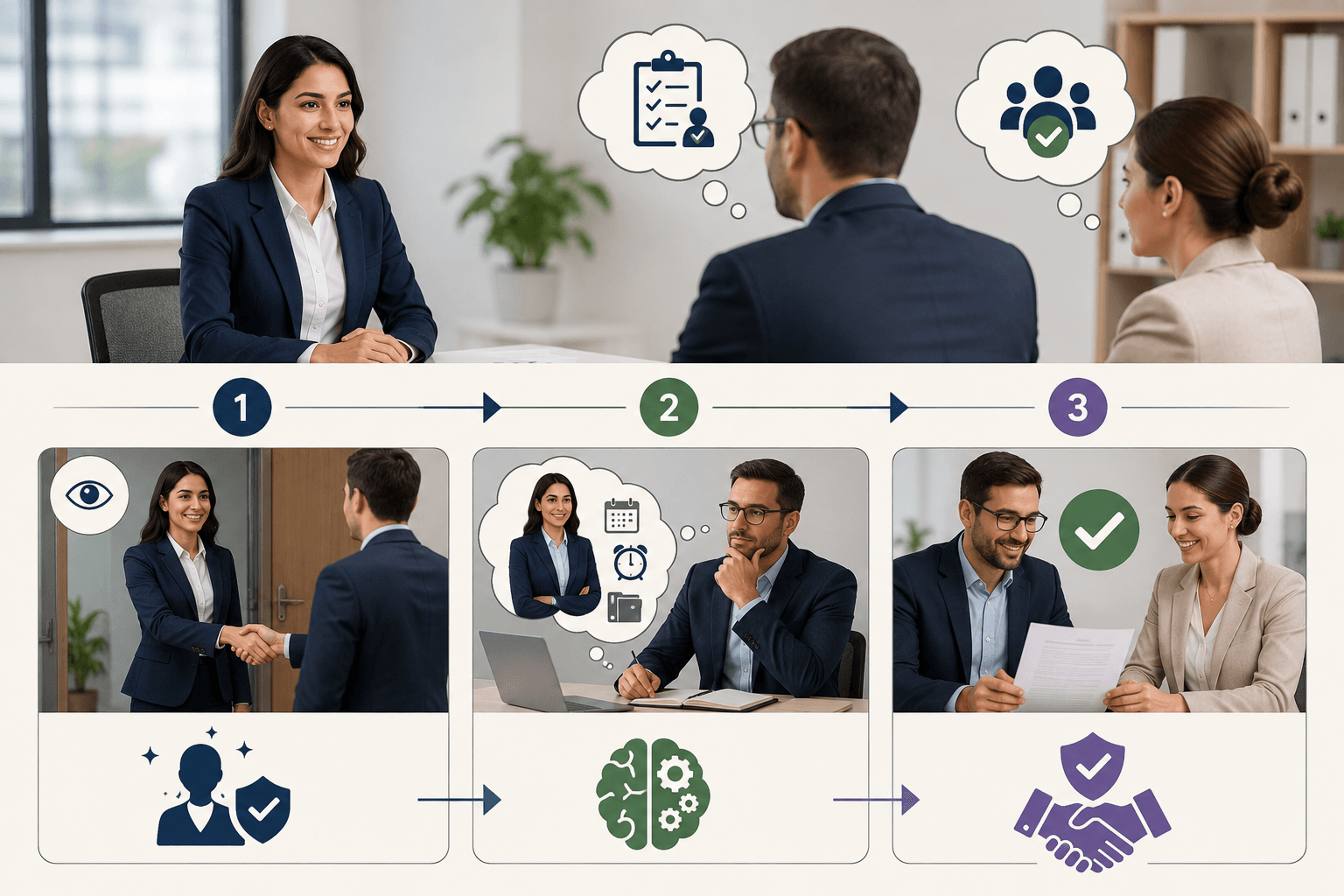
Apart from looking at your skills, the recruiters actively evaluate whether you will fit into their existing office ecosystem. A polished look shows that you understand corporate boundaries and take the opportunity seriously. The following table outlines how your appearance can influence a recruiter's judgment before your qualifications become the main focus.
| Phase | Visual Step | Mental Outcome |
|---|---|---|
| Phase 1 | Visual Impression | Initial greeting and attire assessment |
| Phase 2 | Assumed Professionalism | Recruiter links neat attire to organized habits |
| Phase 3 | Higher Trust Alignment | Interviewer focuses purely on your qualifications |
Subconsciously, a recruiter might associate a crisp, well-coordinated interview dress for female applicants, or sharp, tailored suits for men, with organised work habits. On the other hand, a careless or untidy appearance may create doubts about a candidate's preparedness and professionalism.
Also Read: Tell Me About Yourself: Best Answers for Freshers
What to Wear to an Interview Based on Dress Code
Trying to decode terms in interview dress like “smart casual” or “business professional” can feel a little confusing. We will discuss the right dress code based on the kind of interview you are going for.
Business Professional Interview Attire
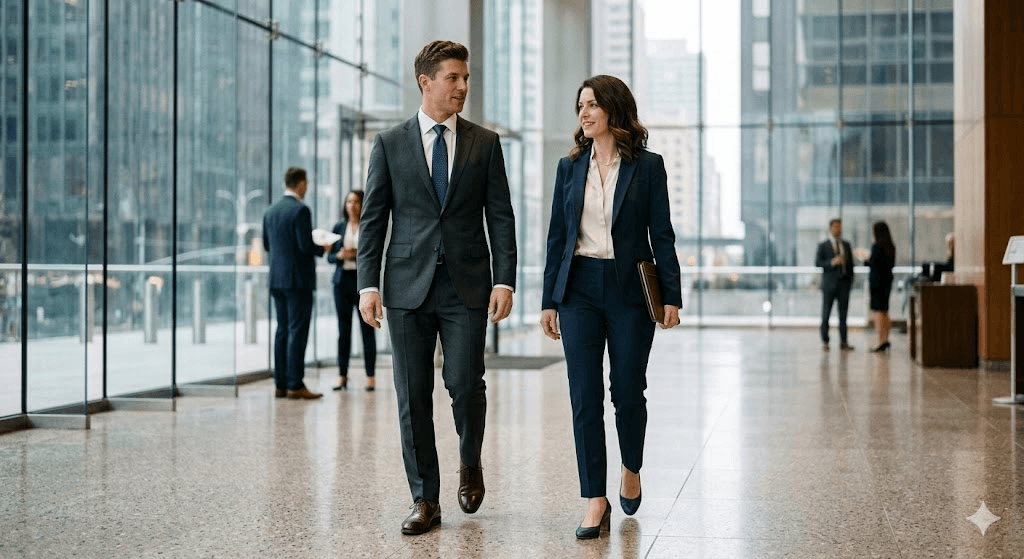
This classic style is basically the top-tier choice for corporate clothing. This interview dress code is still considered mandatory in sectors like banking, legal firms, government work, and executive-level positions.
| Gender Category | Primary Attire Pieces | Footwear Standards | Key Color Rules |
|---|---|---|---|
| Men | Dark matching two-piece suit, white shirt, silk tie | Polished leather Oxford shoes | Navy, charcoal grey, solid black |
| Women | Pantsuit or structured knee-length skirt suit, silk blouse | Closed-toe leather pumps or high-end flats | Dark neutral tones, cream accents |
For men, a dark navy or charcoal two-piece suit forms the foundation. Pair this with a pressed white or light blue long-sleeved button-down shirt. Add a silk tie featuring subtle geometric patterns or solid tones, and finish with polished leather Oxford shoes.
For women, the best interview dress is a matching pantsuit or a structured skirt suit in dark tones, which provides the perfect formal dress for women in interview settings. The skirt hem must sit at or just below the knee. Combine this with a high-quality silk or microfiber blouse that features a conservative neckline. Select closed-toe leather pumps with a modest heel or high-end structured flats.
Business Casual Interview Attire
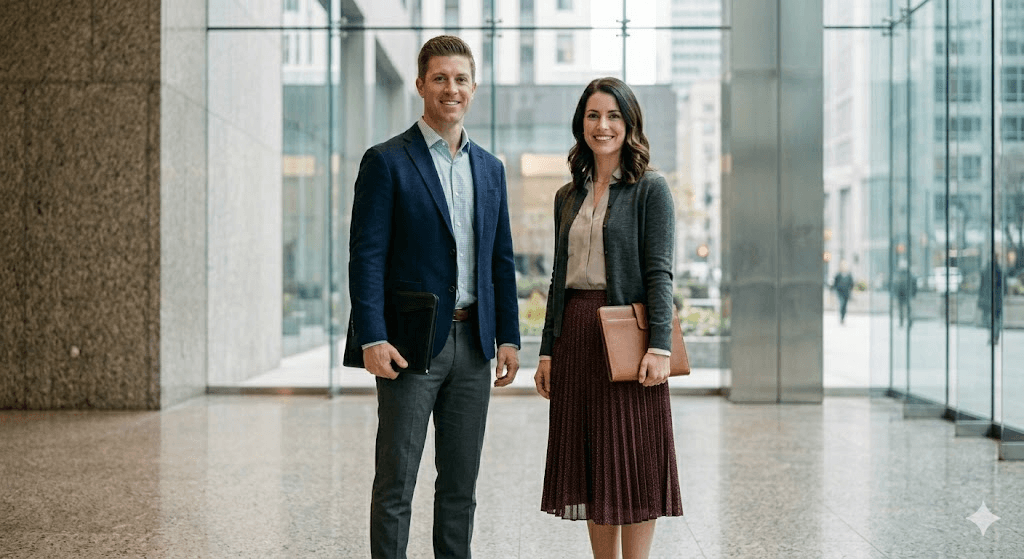
Business casual means removing the requirement for a full matching suit and tie. It serves as the standard baseline for real estate, education, healthcare administration, and corporate retail roles.
Men should choose high-quality chinos or tailored trousers in khaki, navy, or grey. Pair these pants with a crisp, long-sleeved, collared shirt. Layering with an unstructured blazer or a fine-gauge knit sweater adds excellent structure. Leather loafers or monk strap shoes complete this look perfectly without needing a tie.
Tailored ankle trousers, pleated midi skirts, and structured sheath dresses are the best interview dress for women. You can go for a fitted blouse, button-front shirt, or tailored cardigan with these bottoms. The best colours for interview outfits for women include emerald, burgundy, or classic cream.
Smart Casual Interview Attire

Smart casual is the link between everyday casual and business smart. This is a dress code popular for customer service roles, hospitality management, and modern creative fields.
Men can wear dark-wash denim that is entirely free of distressing, fading, or frayed hems. Pair this denim with a tucked-in Oxford cloth button-down shirt and a clean leather belt. You can also wear clean, solid-colored leather sneakers, though suede desert boots are safer.
Women can style dark tailored jeans with an elegant silk blouse and a sharp structured blazer. A chic wrap dress paired with a denim jacket or casual blazer also works beautifully. Footwear should lean toward leather loafers, pointed flats, or low block heels to keep the look intentional.
Creative, Startup, and Tech Interview Attire
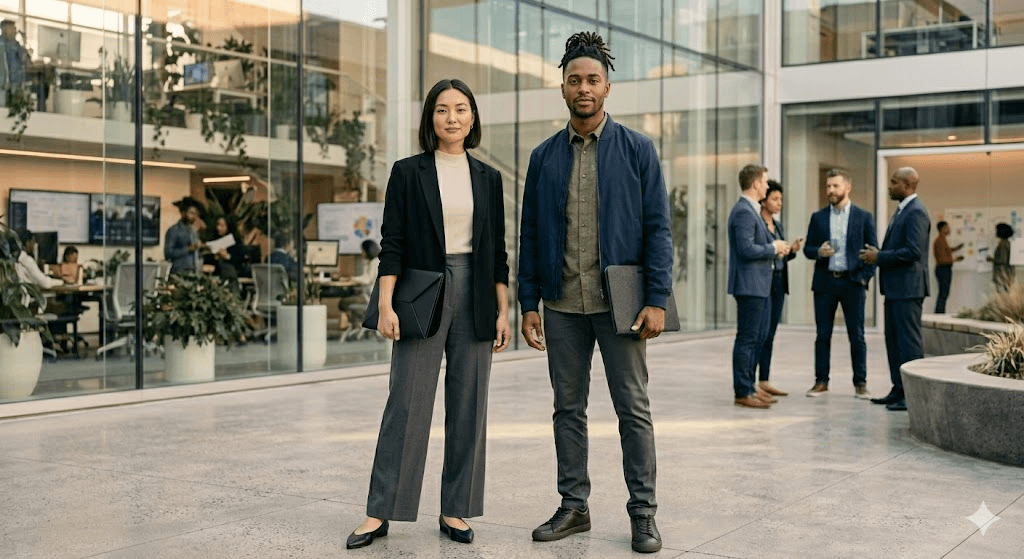
Tech companies and creative agencies often have more relaxed dress codes than traditional corporate workplaces. In these environments, a full suit may feel overly formal, but overly casual clothing, such as baggy hoodies or worn-out jeans, can still create a poor impression.
The goal is a polished, contemporary look. Men should wear slim-fit chinos paired with a premium utility shirt or a high-quality knit polo. Adding a casual bomber jacket or a tailored blazer provides a clean silhouette.
Women can select monochromatic combinations, such as wide-leg trousers paired with a minimalist mock-neck top. Avant-garde cuts, subtle geometric patterns, and modern knitwear styles work exceptionally well here. This approach builds a stellar interview dress for female applicants trying to show cultural alignment with cutting-edge industries.
What to Wear for Different Types of Interviews
The venue and format of your meeting change how you dress for your interview. Here is how to adjust your wardrobe choices based on the specific style of interview you face.
In-Person Interviews
On-site interviews require flawless execution because hiring managers will view you from every angle, including while walking down the hall.
- Check your back for stray lint, wrinkles, or hanging threads.
- Ensure your garments look impeccable from behind.
- Test how your clothes fit while sitting down, standing up, and shaking hands.
Pay attention to your socks; they become visible when you sit down. Choose mid-calf options that match your trousers so no bare skin shows. Ensure your pockets remain flat and are not bulging with your wallet, keys, or phone.
Virtual Interviews
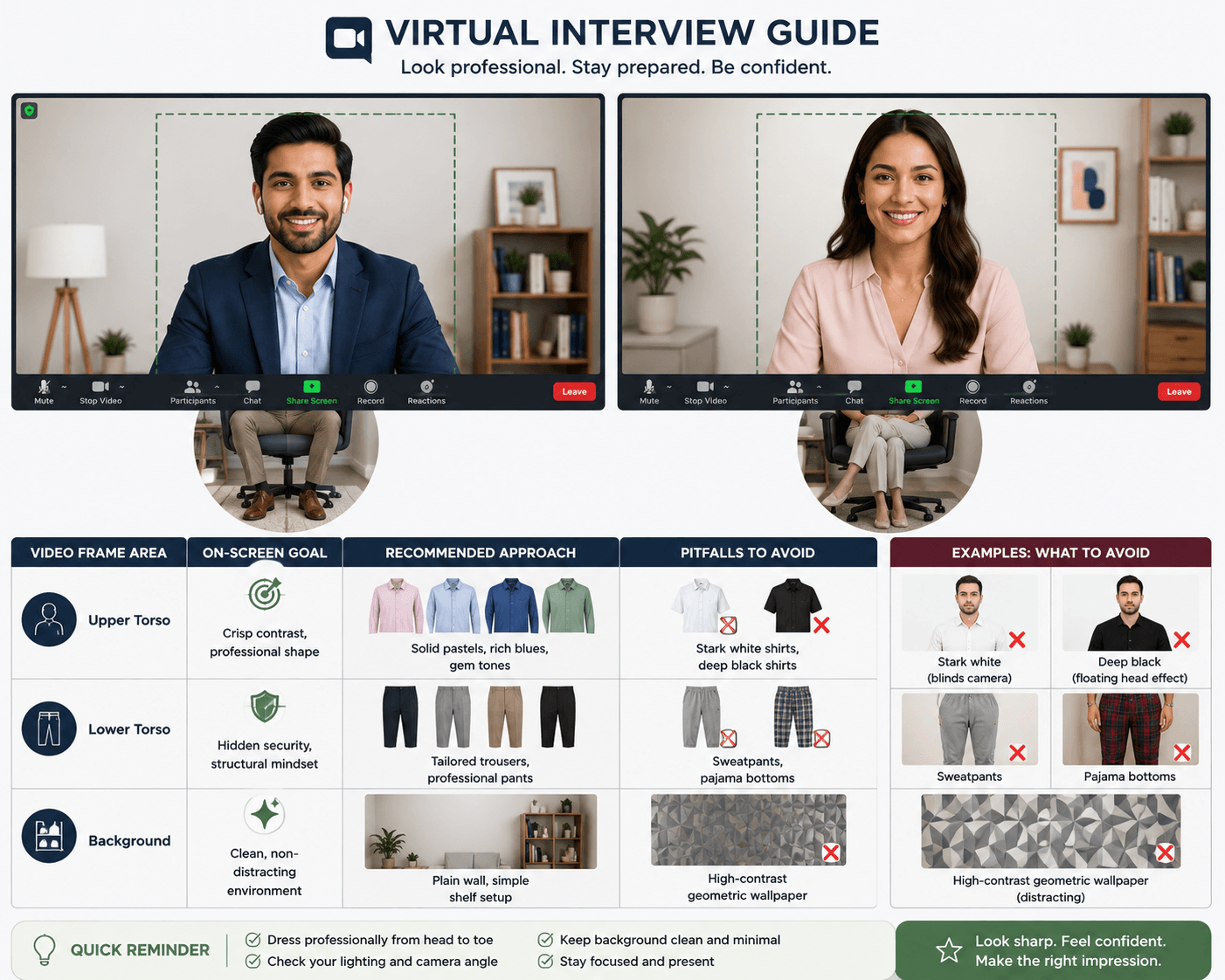
Online interviews through Zoom or Microsoft Teams shift the entire focus to your upper torso. Therefore, the best interview dress for a female or male would be something that shows their upper part neat and professional. However, you must still wear professional trousers on your bottom half to maintain a serious mindset and prevent embarrassment if you must stand up unexpectedly.
Also Read: Top Phone Interview Questions
| Video Frame Area | On-Screen Goal | Recommended Approach | Pitfalls to Avoid |
|---|---|---|---|
| Upper Torso | Crisp contrast, professional shape | Solid pastels, rich blues, gem tones | Stark white shirts, deep black shirts |
| Lower Torso | Hidden security, structural mindset | Tailored trousers, professional pants | Sweatpants, pajama bottoms |
| Background | Clean, non-distracting environment | Plain wall, simple shelf setup | High-contrast geometric wallpaper |
Avoid wearing stark white shirts, which can blind the camera sensor, or deep black tops, which make you look like a floating head. Choose soft pastels, rich blues, or warm earth tones that create clean contrast with your background. Avoid busy pinstripes or houndstooth patterns, which create a distracting shimmer effect on webcams.
Panel Interviews

Facing a panel means you will have multiple sets of eyes auditing your appearance simultaneously. Any slight wardrobe malfunction or awkward fit will be noticed by at least one person in the room.
Stick to conservative, time-tested classics to avoid polarizing your audience. Choose a structured formal dress for an interview setup that retains its shape perfectly when you turn your head or shift your weight to address different panel members. Keep your accessories quiet.
Also Read: Effective Tips to Crack The Group Discussion Rounds Easily
Informal Networking and Coffee Chat Interviews

An invitation to discuss a job role at a local cafe still requires professional boundaries. Do not show up in athletic wear or casual loungewear just because the meeting is at a coffee shop.
Aim for a polished, smart casual standard. You want to look like you casually threw on a fantastic outfit without trying too hard.
A clean sweater paired with tailored trousers or a crisp midi dress strikes the right note. It shows you are approachable yet completely ready for a professional corporate environment.
Best Colours to Wear for an Interview
Colour psychology plays a powerful role in human perception. The shades you choose can project authority, foster trust, or accidentally trigger negative reactions.
Colours That Convey Professionalism and Confidence
Navy blue stands out as the ultimate interview colour because it universally projects trust, teamwork, and reliability. Corporate research shows that recruiters associate blue with candidates who fit in easily.
| Recommended Colour | Psychological Projection | Ideal Career Use Case |
|---|---|---|
| Navy Blue | Trust, collaboration, reliability | Team-oriented roles, general staff positions |
| Charcoal Grey | Intellect, analytical skill, balance | Tech, engineering, and data analyst roles |
| Crisp Black | High authority, leadership, power | Executive management, C-suite positions |
| White | Clarity, honesty, precision | Client‑facing roles, healthcare, and administration |
Charcoal grey is an excellent neutral choice that projects intellect, balance, and analytical capability. It looks sharp without being as stark or aggressive as solid black. Black works best for high-level management or executive interviews where asserting ultimate authority and leadership is necessary. White complements navy and grey beautifully, and it helps balance darker tones.
How to Choose the Right Interview Outfit
Selecting your attire requires strategy, research, and a clear understanding of the company culture. Here is how to evaluate an employer's environment to build an ensemble that strikes the perfect balance.
Research the Company's Dress Code
Never guess what an employer expects you to wear. Start by auditing the company website, social media handles, and LinkedIn profiles of current employees.
- Check team photographs from recent office events.
- Watch corporate culture videos to see daily workplace attire.
- Read employee handbooks if they are publicly accessible online.
If the digital trail leaves you guessing, reach out directly to the Human Resources coordinator. A quick email asking about the standard office dress policy shows proactive preparation rather than cluelessness.
Consider the Industry and Job Role
Dress codes vary across industries. What works well for an interview at a creative agency may not be suitable for a role in investment banking or asset management.
| Industry Category | Standard Dress Expectation | Key Pieces |
|---|---|---|
| Finance / Law | High-level corporate structure | Dark tailored suits, ties, and Oxford shoes |
| Tech / Startups | Functional simplicity | Dark denim, chinos, crisp button-downs |
| Creative / PR | Structured, modern style | Tailored blazers, tasteful statement pieces |
Matching the industry standard prevents you from looking like an outsider on day one.
Dress Slightly More Professionally Than the Workplace Standard
The common dressing guideline still applies: dress one notch above the daily office uniform. If the employees wear casual t-shirts and jeans, your best move is to wear smart chinos and a collared shirt.
Should the daily expectation be business casual, you must upgrade to a full structured suit. Dressing slightly sharper than the current team demonstrates respect for the interview process. It proves you understand that an interview is a formal occasion.
Balance Professionalism and Comfort
Physical discomfort destroys interview performance because a tight waistband or itchy fabric creates a constant distraction.
Go for breathable materials, like high-quality cotton, wool blends, and structured linens. Ideally, interview outfits for women, or tailored menswear options, must sit right across the shoulders and the waist. When you feel physically at ease, your posture tends to straighten up, and the calm, natural confidence shows up on its own.
Colours to Avoid During an Interview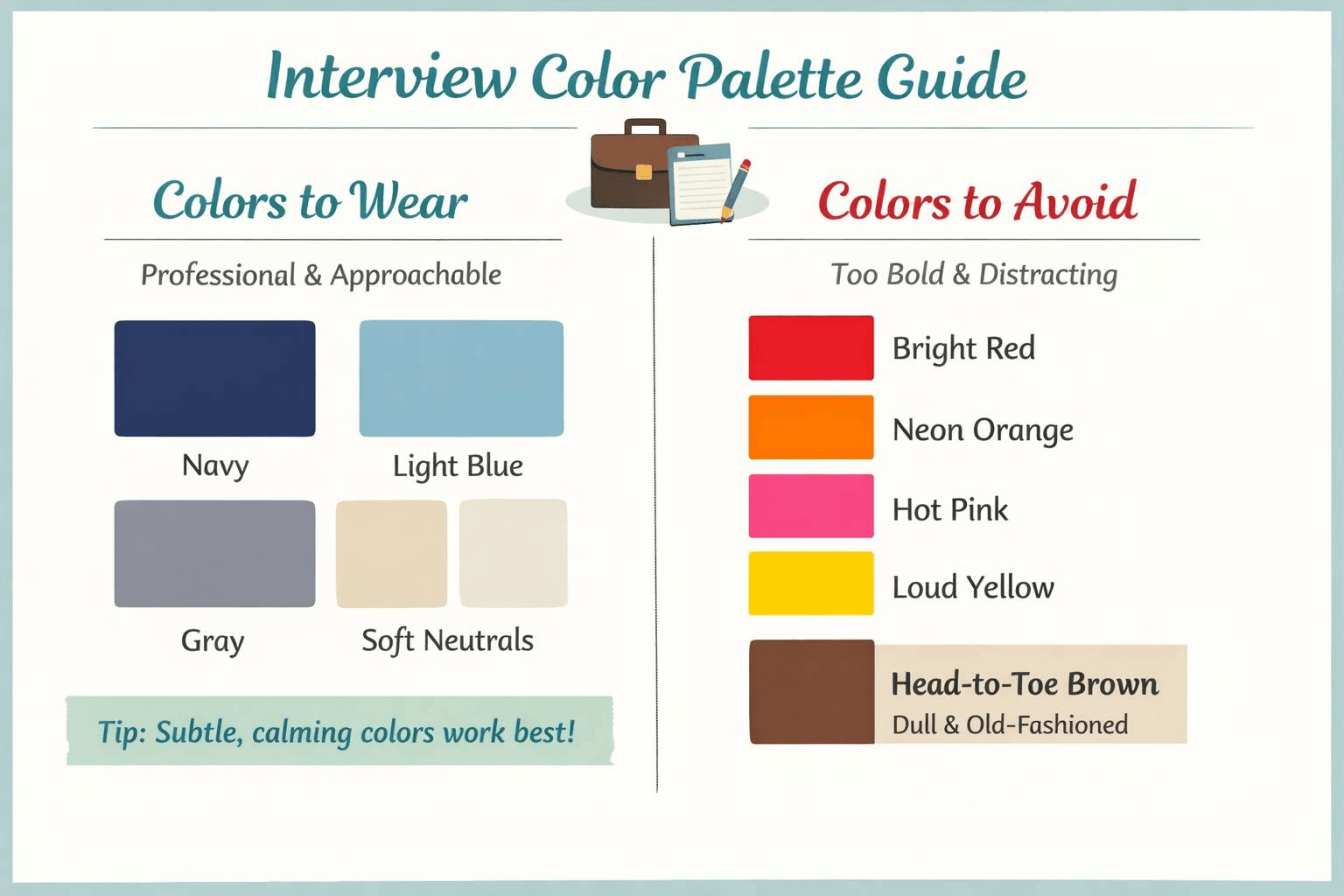
Try not to wear super bright, high-saturation shades like neon orange, hot pink, or loud canary yellow. They dominate the whole room and strain the interviewer’s eyes. They’ll pull attention away from the actual words coming out of your mouth.
Brighter colours can be used as accents, but they should not distract from your overall presentation. Avoid wearing head-to-toe brown. Neutral colours are usually the safest option, while bold colours should be used thoughtfully and in moderation.
How to Combine Colours Effectively
Stick to the three-colour rule, so everything looks put-together and intentional, without turning into a weird mix.
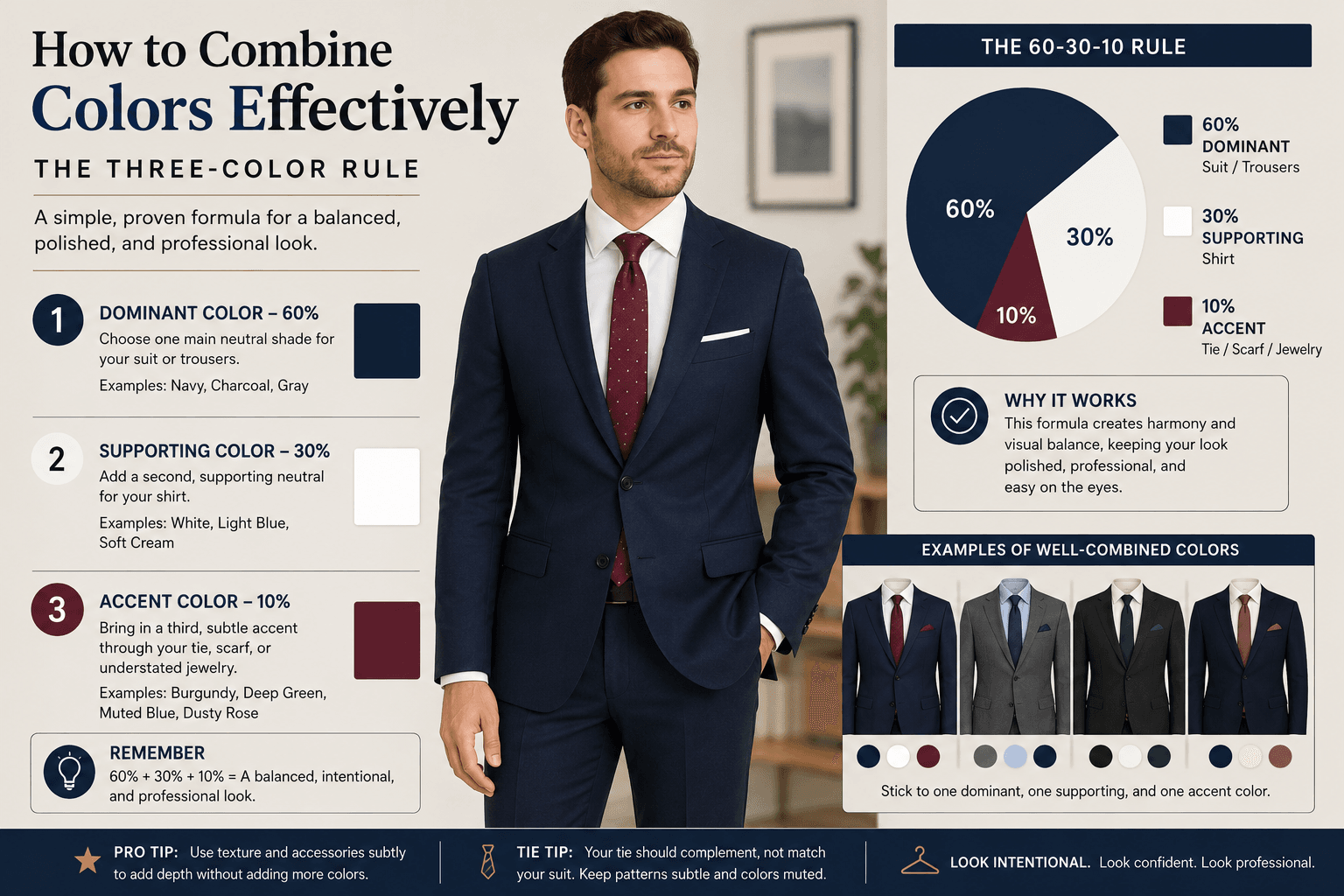
This 60:30:10 ratio will keep your appearance balanced, polished, and professional, not messy, not scattered, not disorganised in any way.
Interview Outfit Ideas for Different Candidates
Tailoring your wardrobe to your specific demographic and career stage ensures your look fits seamlessly. Here are outfit blueprints for different candidates.
What Women Should Wear to an Interview
Women have great wardrobe flexibility, but maintaining a clear corporate structure remains essential. A tailored pantsuit in charcoal grey serves as a fantastic baseline choice.
| Outfit Element | Corporate Selection |
|---|---|
| Base Attire | Charcoal grey pantsuit OR navy sheath dress with cream blazer |
| Top Selection | Ivory silk blouse with an entirely conservative neckline |
| Footwear | Closed-toe pointed flats OR two-inch sturdy block heels |
| Accessories | Minimalist stud earrings and a structured leather tote bag |
Alternatively, a navy blue sheath dress paired with a cream blazer offers a timeless look. Make sure the blouse fabric is opaque and features a modest neckline. For footwear, choose closed-toe pointed flats or modest two-inch block heels. Complete your interview dress for women ensemble with a structured leather tote bag large enough to hold printed copies of your resume without folding them.
What Men Should Wear to an Interview
Men should focus heavily on tailoring, fit, and clean alignment. A poorly fitted suit looks cheap, regardless of how much money it actually costs.
- Start with a single-breasted, two-button suit in dark navy blue.
- The jacket sleeves should end right at the wrist bone, exposing roughly half an inch of your white shirt cuff.
- Pants should have a subtle break where they meet your leather shoes.
A high-quality formal dress for an interview for male candidates worked well when paired with a solid black or dark brown leather belt matching the shoes perfectly.
What Freshers Should Wear to an Interview
Entry-level candidates often lack the budget for luxury designer corporate wear, and recruiters do not expect it. Focus on neatness, proper fit, and clean presentation.
| Candidate Focus Area | Core Priority | Budget Wardrobe Solution |
|---|---|---|
| Young Women | Clean tailoring, zero wrinkles | Pressed white button-down, black tailored ankle trousers |
| Young Men | Neat alignment, structured silhouette | Light blue dress shirt, khaki trousers, navy blue blazer |
Young women can look exceptional by pairing a well-pressed white button-down shirt with black tailored ankle trousers. Young men can choose a light blue dress shirt, flat-front khaki trousers, and a classic navy blue blazer. Ensure everything is ironed and free of stains to show you take the opportunity seriously.
Also Read: Most Common Interview Questions for Freshers
Interview Grooming and Appearance Tips
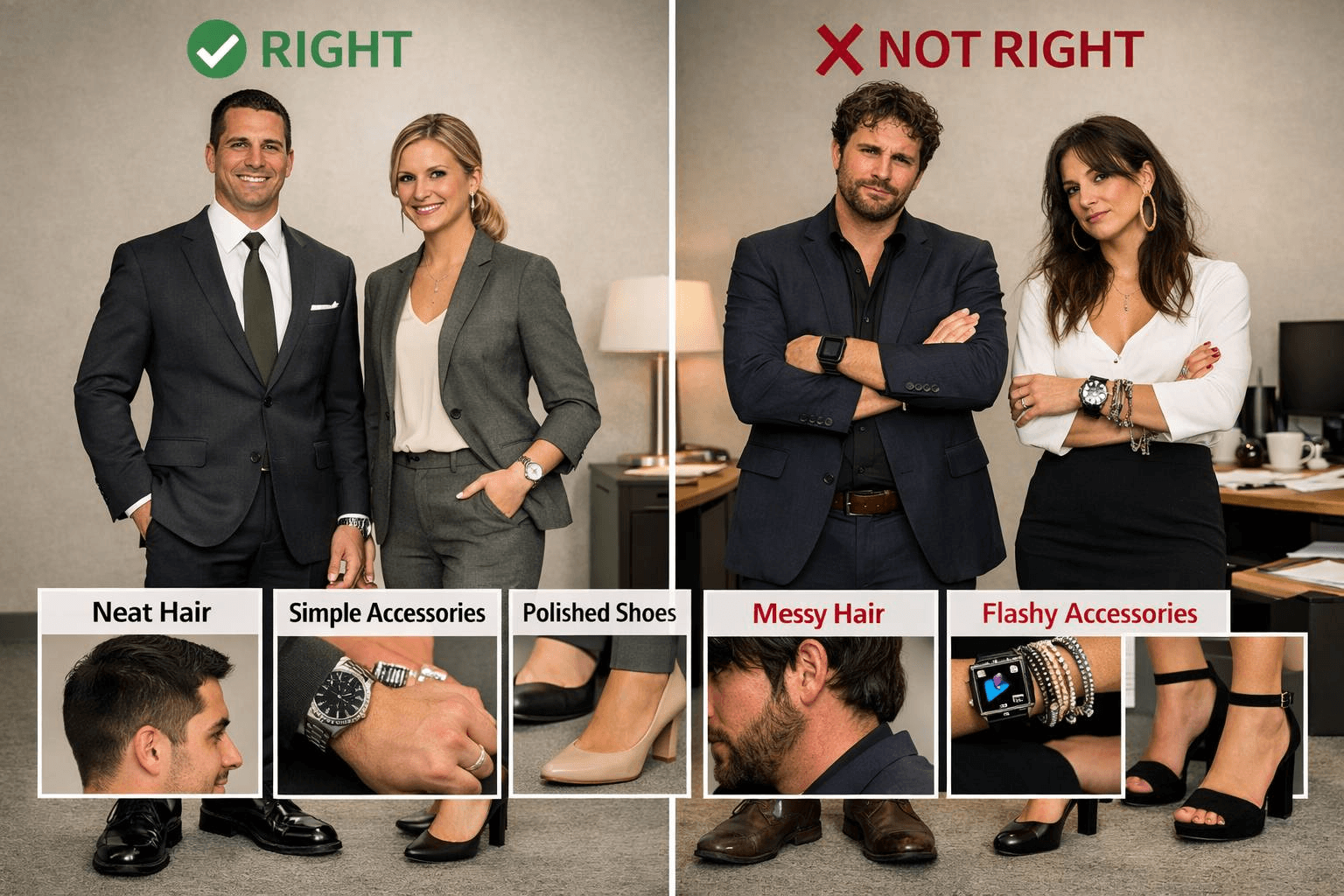
An expensive outfit cannot save a sloppy grooming routine. Your personal presentation needs to match the high standards of your attire.
Hair and Personal Grooming
Your hair needs to be clean, tidy, and styled away from your face so you do not fiddle with it during the meeting. Men should get a clean haircut a few days before the interview and trim any facial hair into precise lines. If you choose a clean-shaven look, shave on the morning of the interview to avoid late-day stubble. Women should opt for neat styles like a sleek low ponytail, a tidy bun, or smooth, brushed-out waves.
Accessories, Jewelry, and Watches
Keep your jewelry quiet, minimal, and classic. Heavy, dangling bracelets that clink against the desk when you move your hands can be highly distracting to an interviewer.
- Wear small, simple stud earrings (pearls, diamonds, or silver balls).
- Stick to a single, understated ring on each hand.
- Select a classic analog watch with a leather or metal link band.
- Avoid loud smartwatches that flash notifications across your wrist during the conversation.
Shoes and Footwear
Shoes are often the first detail a recruiter looks at to gauge an applicant's attention to detail. Your footwear must be clean, entirely free of scuffs, and appropriate for the office environment.
| Shoe Style Category | Men's Standard | Women's Standard |
|---|---|---|
| Primary Footwear | Polished leather Oxford or Derby lace-ups | Closed-toe pointed flats or modest block heels |
| Prohibited Styles | Casual canvas sneakers, open-toe sandals | Sky-high stiletto heels, casual flip-flops |
For men, a polished leather lace-up shoe like an Oxford or Derby is the gold standard. For women, a closed-toe flat or a low pump works best. Avoid wearing casual canvas shoes, open-toe sandals, flip-flops, or sky-high stiletto heels.
Fragrance and Makeup Guidelines
Interviews take place in enclosed spaces, making strong smells a major liability. Many people suffer from severe chemical sensitivities or asthma triggered by strong perfumes.
Skip the cologne or heavy perfume entirely; a fresh shower and simple deodorant are all you need. Keep your makeup looking natural and understated. Focus on a clean base, neutral eyeshadows, and a soft, natural lip colour. Avoid dramatic cat-eye eyeliner or bold, glittery cosmetics.
Common Interview Outfit Mistakes to Avoid
Even smart candidates sometimes make simple wardrobe mistakes that ruin their chances. Here are the top five pitfalls to watch out for when preparing your attire.
Wearing Overly Casual Clothing
Showing up in casual pieces like athleisure leggings, graphic t-shirts, shorts, or ripped denim signals that you do not care about the job. Even if the office operates on a highly relaxed daily schedule, an interview remains a formal process. Dressing too casually shows a lack of effort and can make you seem unprofessional to the hiring panel.
Choosing Wrinkled, Dirty, or Ill-Fitting Clothes
Wrinkled shirts, lint-covered jackets, or stained cuffs instantly make you look disorganised. Clothes that are too tight look unprofessional, while oversized garments make you look sloppy and careless. Prepare your clothes the night before to give yourself plenty of time to steam or iron out any creases.
Wearing Distracting Patterns or Accessories
Don’t go for loud animal prints, neon pinstripes, or clothing with big brand logos scribbled across the front. Your outfit should frame your face and help your conversation, not fight for attention.
Using Strong Fragrances or Applying Too Much Makeup
If you pile on heavy foundation, wear dark smoky eyes, or use strong cologne, it can end up distracting in a small meeting room. The interviewer should remember your sharp replies, not the presence of perfume or any bold choice in your makeup. Try to keep your look simple, clean, and classic.
Putting Style Ahead of Comfort
Don’t wear brand-new shoes that will cause blisters, or an itchy wool blazer, just because it feels trendy. If you’re uncomfortable, you’ll start fidgeting, adjusting your clothes, and losing focus during the meeting. Go with well-fitted, comfortable classics so you can sit naturally and talk confidently.
Also Read: AI Interview Questions for Freshers
Take the next step in your career ?
Interview Day Appearance Checklist
Use this quick, practical list so your presentation feels solid and polished, without last-minute surprises.
Outfit Checklist
- Before you step out, take a moment to scan these clothing details:
- Clothes are completely free of lint, pet hair, and dust.
- No visible wrinkles on the shirt sleeves, collar, or trousers.
- Every button is attached firmly, and zippers glide smoothly.
- The leather belt matches the colour and finish of your shoes.
- Socks are tall enough to cover your legs fully when you’re seated.
- The fabric looks opaque and professional even under bright lights.
Grooming Checklist
A final look in the mirror ensures your grooming is up to par:
- Hair is neatly styled, dry, and fixed away from your eyes.
- Fingernails are trimmed, clean, and free of chipped polish.
- Facial hair is cleanly shaved or neatly trimmed.
- Teeth are clean, and breath is fresh (avoid having onions or garlic in your meals).
- No strong perfume or cologne has been applied to skin or clothing.
- Makeup is subtle, well-blended, and natural-looking.
Last-Minute Appearance Checks
Once you arrive at the interview location, step into the restroom for three quick final checks. First, check your teeth in the mirror to make sure no food particles from breakfast or coffee are stuck there.
Second, check your collar and tie to ensure they are straight and centered.
Finally, take a deep breath, roll your shoulders back, and walk into the room with great posture. Your outfit is perfect, and you are ready to ace the interview.
ABOUT AUTHOR
Similar Blogs

Apply Now
Apply Now
frequently asked questions
What should you wear to an interview?
+You should wear clean, well-fitted, professional clothes that match the company's vibe. Stick to neutral colours, polished shoes, and light grooming, and you'll look ready for anything when deciding what to wear to an interview.
What are the 5 rules for dressing for an interview?
+Keep your clothes clean and ironed, pick neutral tones, focus on fit over brand names, groom yourself properly, and try to match the company culture without going overboard when following an interview dress code.
What is the 3 3 3 rule for clothes?
+You wear 3 pieces like a top, bottom, and jacket, add 3 accessories at most, and stick to 3 colours total. It keeps your outfit simple and sharp.
What colours are best to wear for a job interview?
+You can't go wrong with navy, grey, black, or white. These colours make you look confident and professional, no matter what industry you're walking into.
What colours should you avoid wearing to an interview?
+Try to avoid neon shades, bright red or loud prints. They can pull focus away from what you're saying and might come off as a bit much.
Is it okay to wear jeans to an interview?
+Usually not, unless you know for sure the workplace is super casual. You're safer in dark, well-fitted trousers if you haven't confirmed the interview dress code.
What should women wear to a job interview?
+You can go with a tailored blazer, trousers or a knee-length skirt, a simple blouse, closed-toe shoes and light jewellery for a clean, confident look.
What should men wear to a job interview?
+A well-fitted suit or blazer with a dress shirt, matching trousers, polished shoes and a simple tie works well for most formal interview settings.
What should freshers wear to an interview?
+You don't need anything fancy or branded. Just a neat shirt with trousers or a basic blazer works fine. Confidence matters more than the price tag when choosing what to wear to an interview.
What should you wear to a virtual interview?
+Dress the same way you would in person, even below the camera. Stick to solid colours and make sure your lighting actually shows your face well.